
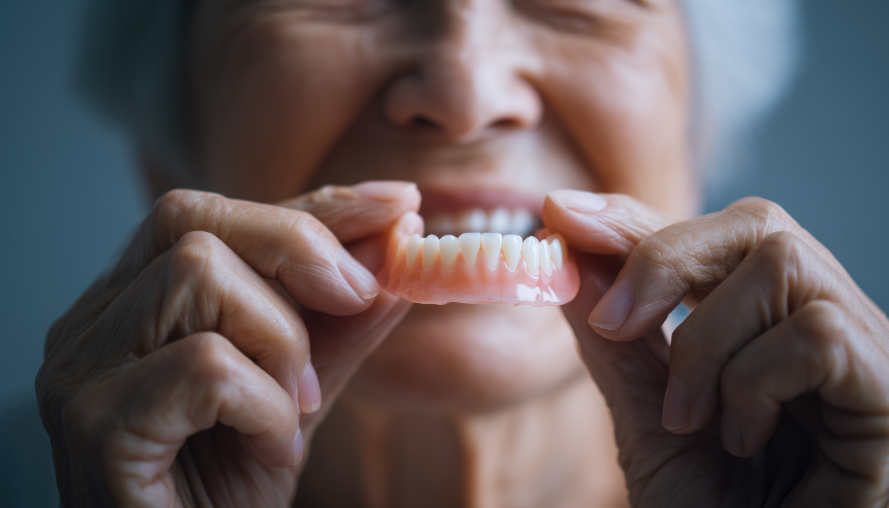
If you have been without teeth for several years, you may wonder whether dentures are still an option for you. Over time, the jawbone naturally begins to shrink after teeth are removed, which can affect facial shape, bite stability, and the way dentures fit. Although bone loss can create challenges, it does not necessarily prevent you from getting dentures. In fact, many patients with long-term tooth loss are still great candidates for a renewed, complete smile — sometimes with a few extra treatment steps to support comfort and stability.
How Bone Loss Develops After Tooth Loss
Your tooth roots do more than anchor your teeth in place — they stimulate the jawbone and help keep it strong. When teeth are removed and no longer provide this stimulation, the bone gradually begins to resorb, or shrink. This process can occur slowly over many years and may lead to changes in facial structure, sunken cheeks, or difficulty keeping traditional dentures in place.
The longer someone has been without teeth, the more likely they are to experience noticeable bone loss in the jaw. However, modern restorative dentistry offers several solutions to help support dentures even when the bone has changed significantly.
Can You Still Get Dentures with Jawbone Loss?
In most cases, yes — you can still receive dentures even if it has been a long time since your teeth were removed. A dentist will evaluate your gums, bone structure, and oral tissues to determine the best approach for creating a comfortable and functional denture.
Some patients may benefit from specially designed dentures that better adapt to areas where bone loss has occurred. Adjustments, relining, or custom shaping can help improve suction, stability, and comfort.
Even if your jawbone has thinned over time, dentures can still restore your ability to chew, speak clearly, and smile with greater confidence.
When Bone Grafting May Be Recommended
If bone loss is more severe, your dentist may recommend a bone graft. This procedure is used to rebuild and strengthen areas of the jaw where the bone has worn away. Bone grafting can provide better support for dentures, improve facial appearance, and create a stronger foundation if you are considering future implant treatment.
Not every patient needs a bone graft, but for those who do, it can significantly enhance long-term comfort and stability.
How Dental Implants Can Help Prevent Further Bone Loss
Traditional dentures rest on top of the gums, while implant dentures are supported by small posts that are placed in the jawbone. These implants act like artificial tooth roots and help stimulate the bone, which can reduce further bone loss over time.
Implant dentures may be especially beneficial for patients who have struggled with loose or uncomfortable dentures in the past. Even with prior bone loss, some patients can still qualify for implants — sometimes after bone grafting or with modified implant placement techniques.
Your dentist will discuss whether implant dentures may be a good option for your needs, lifestyle, and oral health.
With the right treatment approach, many people are able to regain function, comfort, and confidence — even after years without teeth.
About the Practice
The Carrollton community can count on Rosemeade Dental for personalized restorative and prosthetic dentistry solutions, including custom dentures and implant-supported options for patients with varying levels of bone loss. Dr. Suggala carefully evaluates each patient’s oral health and jaw structure to recommend comfortable, functional treatment plans designed to restore confidence and quality of life. With a compassionate approach and attention to long-term comfort and stability, every patient can regain a strong, natural-looking smile.
Call us at (972) 446-1111 or request an appointment online.